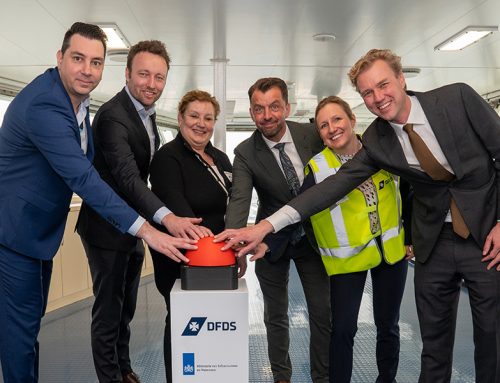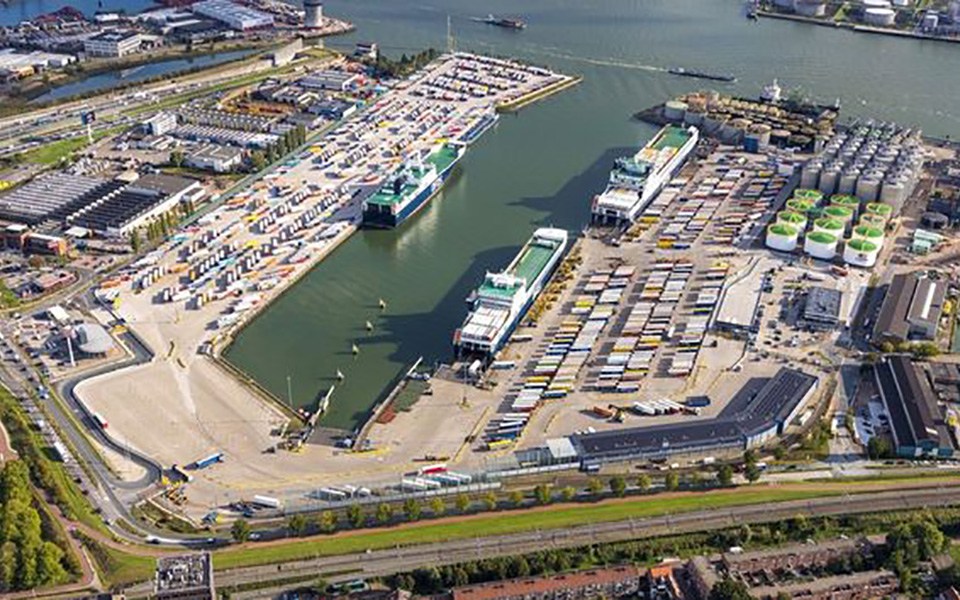
Good news for the planet: some of DFDS’ ships that dock in Vlaardingen will receive electricity via a shore-based power installation from mid-2024.
Rotterdam Shore Power, a joint venture of Eneco and the Port of Rotterdam Authority, will supply this shore-based power. Initially, this facility will be available for the berth of the Jinling roll-on-roll-off vessels operating the scheduled service to and from Immingham. The installation of the shore power is carried out by Actemium and has been made financially possible by subsidies from the central government and the province of South Holland.
The transition to shore power for the berth of the Jinling roll-on-roll-off vessels is in line with DFDS’ sustainable objectives, aimed at reducing environmentally harmful emissions and noise pollution. The other two berths will also be eligible for shore power at a later date. The shore power supply consists of a converted 40-foot container with electrical equipment that makes power from the public electricity grid suitable for use on board the ships. In addition, there is a cable management system that physically transports the electricity from the quay to the ship. A remote control will be used from the vessel to operate the crane on the quay, allowing the cable to be taken on board and linked.
The shore-based power installation has a capacity of 1.8 MW (the energy equivalent of almost 1,500 households) and is expected to supply 3.5 GWh of electricity per year. The estimated CO2 reduction as a result of the investment is approximately 2,100 tonnes per year. In doing so, the initiative contributes to DFDS’ commitment to achieving net-zero CO2 emissions by 2050. This green transition requires significant investment in sustainable solutions, including the aim of achieving 45% of the CO2 reduction within DFDS’ ferry business.